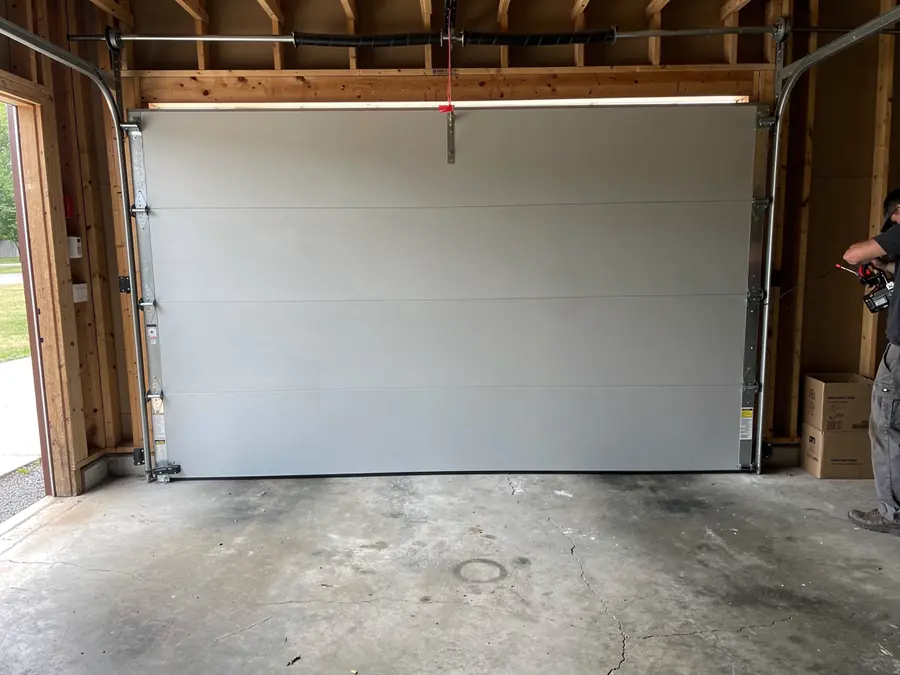
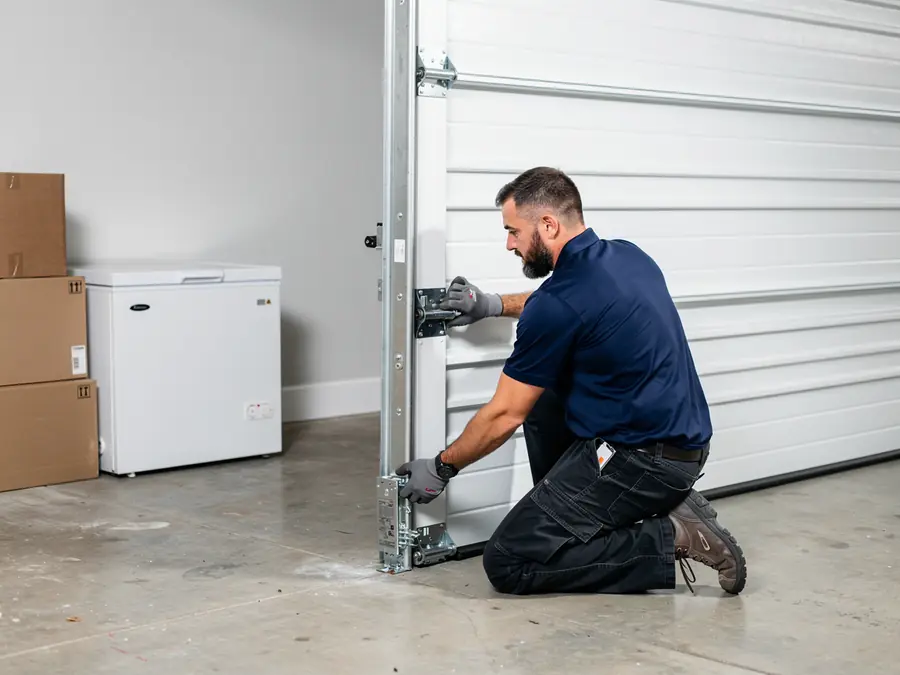
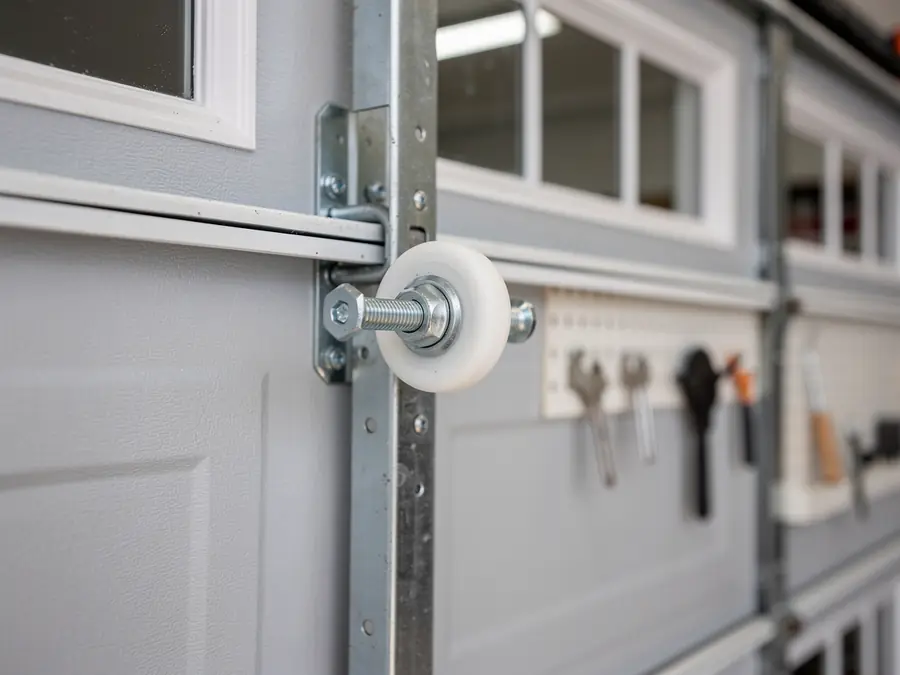
Most of the housing across this service area went up between 1966 and 1999, with a lot of it clustered in the 1980s and 90s. That generation of garage door track was built to a lighter gauge than what gets installed today, and after thirty-plus years the mounting brackets that hold it to the jamb have usually loosened at least once, even on a door that's never had a hard impact. A track that's been re-tightened a few times over the decades doesn't sit as square as it did new, and that's often the start of a door walking off its rollers.
The climate here is mild temperate, so we're not dealing with the hard freeze-thaw cycles that crack concrete slabs and shift door frames the way colder regions do. That's good news in one sense - the slab under the door usually isn't the problem. But humidity and daily heat swings still work on steel track and hardware over a long Florida summer, and on a house with original 1980s or 90s track, that slow corrosion at the bracket bolts is usually what finally lets a track flex enough for the rollers to pop loose.
A door that's been bumped by a car, a bike, or a stored ladder falling against it will come off track immediately, in any town, at any age. That part isn't unique to Lakeland. What is particular to this area is how many doors are old enough that the track was already marginal before the bump ever happened.