
Flat spot hesitation
Then it's a hesitation, where the door seems to catch or jump slightly as it crosses a particular spot in the track, which is the roller hitting a flat-worn section of its own wheel.
 Lakeland, FL
Worn or cracked rollers on a Lakeland garage door usually trace back to original 1980s-90s hardware and daily humidity swings. Here's how the fix works.
Booking
Most roller jobs start with a phone call describing a sound, not a part - a grind, a thunk, a door that hangs up a few inches from the floor.
That's fine. We don't need you to diagnose it before we come out. What helps is knowing roughly how old the door is, since a lot of the housing stock across this service area was built between 1966 and 1999, with the median landing around 1986.
A door from that era is almost always running on steel rollers with no nylon sleeve, which narrows down what we bring on the truck before we even see the opening. If you're near Downtown Lakeland or South Lake Morton, or out toward Combee Settlement, Crystal Lake, or Highland City, the drive is short and we can usually get someone out the same week.
One limitation worth saying up front: if the track itself is bent along with the rollers, that's a separate repair and we'll tell you honestly whether it's worth doing both at once or just replacing the section.
Local causes
Lakeland sits in a mild temperate band, but mild doesn't mean dry or stable. The daily humidity swing - damp mornings, hot afternoons - puts steel rollers through a slow cycle of condensation and drying that plain carbon-steel hardware was never built to handle for decades on end. Combine that with housing stock that's mostly 1980s and 90s construction across the 25 or so named communities in this service area, and you get a huge number of doors still running their original rollers thirty-plus years later.
Those original rollers were fine for the climate they were designed for on paper, but nobody expected them to still be spinning in daily Central Florida humidity this long. The steel wears unevenly, the stems pit, and the roller starts riding off-center in the track. It's not a manufacturing defect - it's just metal doing what metal does after three decades of damp-dry cycling in a part nobody thinks to maintain.
Warning signs
A worn roller rarely announces itself with a total failure. It's a sound first - a rhythmic squeak or grind as the door moves, usually worse on one side than the other.
Then it's a hesitation, where the door seems to catch or jump slightly as it crosses a particular spot in the track, which is the roller hitting a flat-worn section of its own wheel.
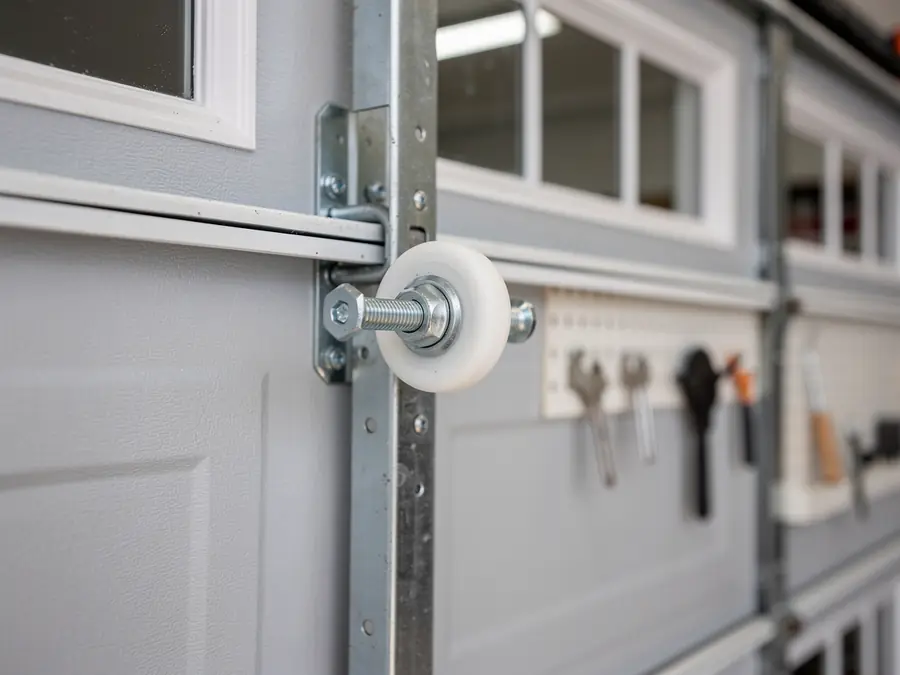
Eventually you'll see it: a roller stem bent slightly out of true, or a wheel that's chipped down to the metal core where the nylon or plastic coating used to be. On older steel-roller setups common in homes built before the 1990s here, you might also notice rust streaking down the track itself, which tells us the roller's been shedding metal shavings as it wears.
None of this is an emergency on its own, but a roller that's binding hard enough to make the opener strain is putting extra load on the cables and the opener motor, and that's where a cheap part turns into an expensive one if it sits too long.
The repair
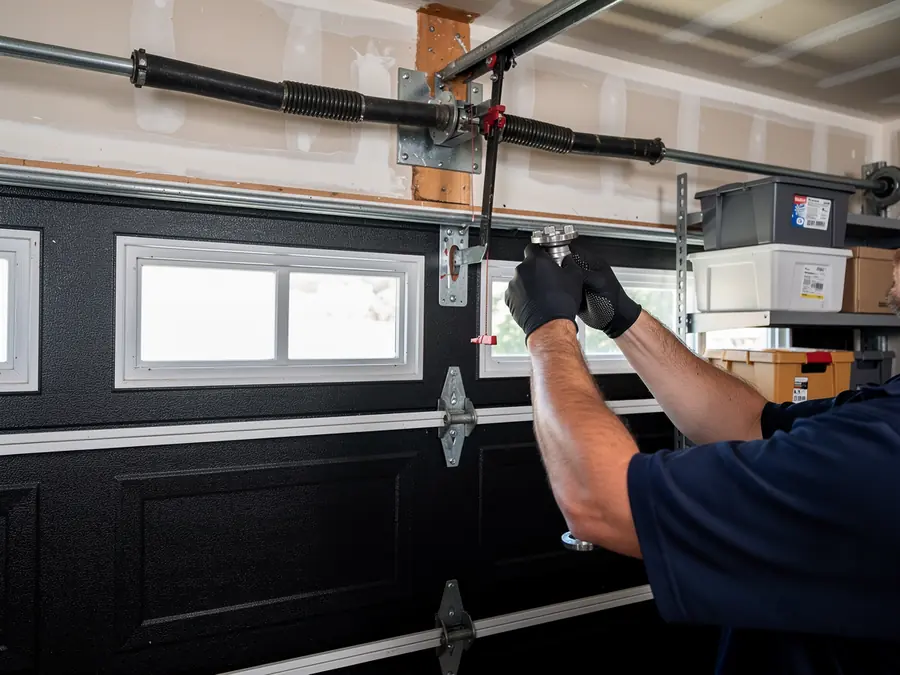
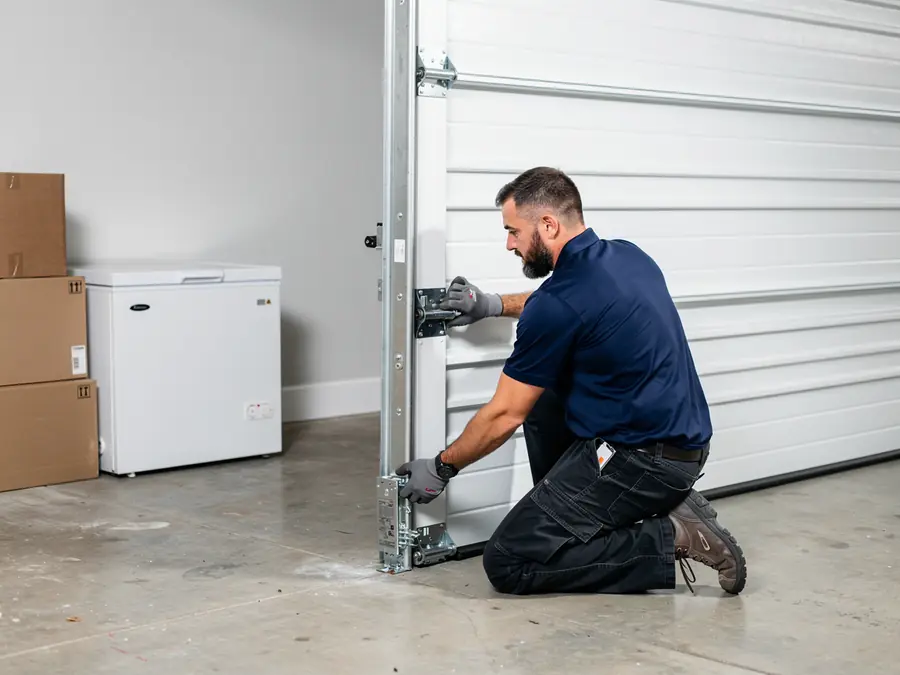
Roller replacement is mechanical, not electrical - we're not touching the opener logic board or any wiring. We disconnect the opener, secure the door, and work one side of the track at a time so the door stays supported throughout.
Each roller gets pulled from its hinge, inspected, and swapped, and we check the hinge itself for elongated roller slots, which is common on doors from the original 1980s-90s builds once the steel has flexed for years.
We typically recommend nylon rollers with sealed bearings for anyone in this climate band, since they don't pit or rust the way the original steel ones do, and they run quieter.
If the track is also bent or the hinges are cracked, we'll flag that separately rather than bundling it in - a roller swap on a warped track just wears the new rollers out again. For the roughly 44,232 owner-occupied houses across this service area, most of this is a same-visit repair once we've seen the door in person.
Questions
If the noise or hesitation happens at the same spot every time the door travels, that's almost always a roller or track issue, not the opener. Opener problems tend to show up as the door not responding at all, or stopping and reversing randomly. A visual check of the rollers for cracked wheels or rust usually confirms it.
You can, and sometimes that's the right call if only one roller shows visible damage. But if the door is original to a house built in the 1980s or 90s, the other rollers are the same age and likely close behind, so we'll tell you honestly if a full set makes more sense than a repeat call in a year.
Usually, yes, if the rollers were the source. But if the track has rust buildup or slight bending from years of a worn roller riding off-center, some noise can persist until that's addressed too. We check the track at the same visit so you're not guessing afterward.
Explore more
Ready when you are
Lakeland Garage Door Co repairs and installs garage doors, springs and openers in Lakeland, FL and the surrounding area.