
Reversing with no warning
Another common one: the door reverses halfway up with no warning, which on these older openers is almost always a limit switch that's crept out of position rather than a modern safety sensor issue.
 Lakeland, FL
Crystal Lake, Lakeland
Serving Crystal Lake's 1970s housing stock, 4 miles from Lakeland. We fix the extension-spring and chain-drive setups common to homes built around 1975.
Local causes
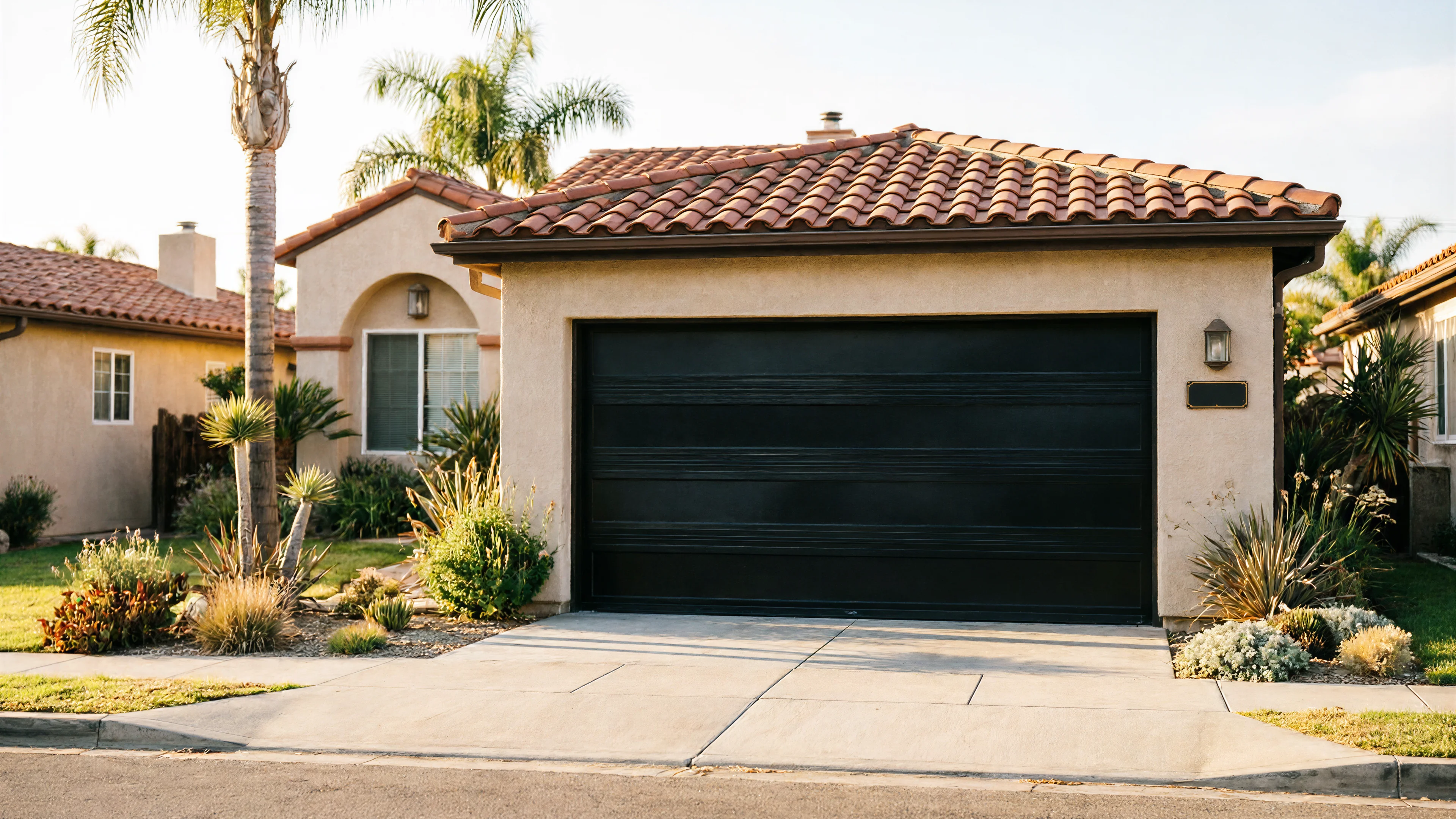
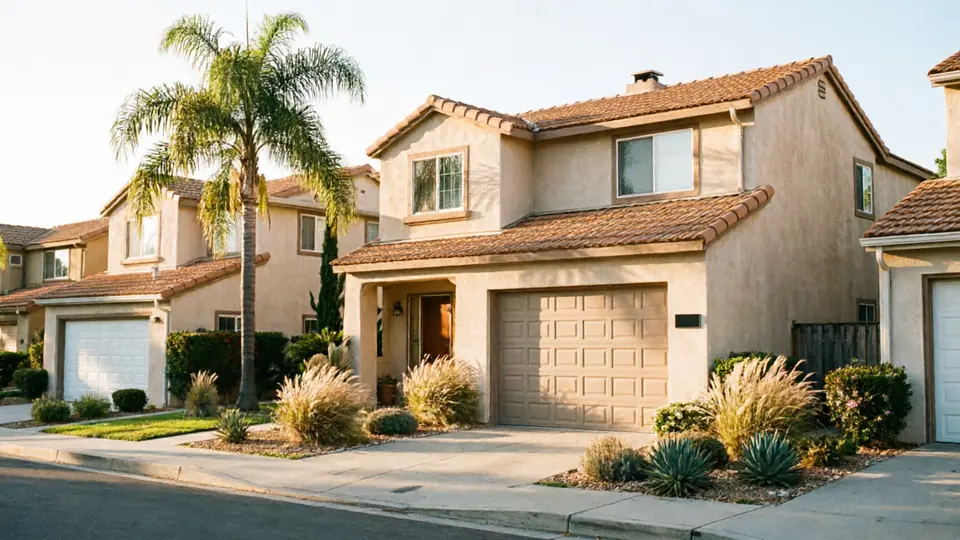
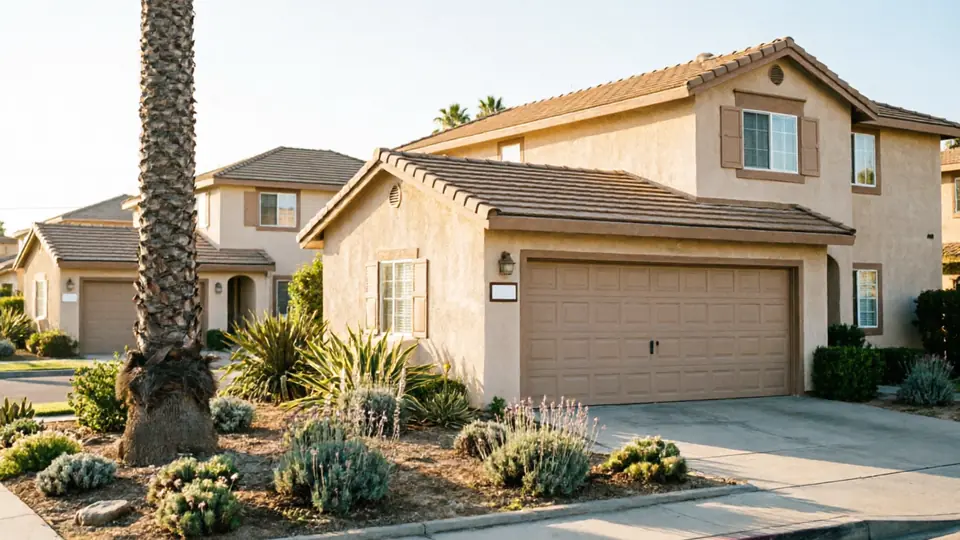
Crystal Lake sits about four miles out from Lakeland, and most of the houses here went up around 1975 - a good decade before the newer construction that fills out the rest of the service area. That matters more than people think. A door hung in 1975 almost always came with extension springs running along the horizontal track, not the torsion bar you'd find on a house built in the 1990s. Extension springs stretch and sag with age in a way torsion springs don't, and after fifty years most of the originals in this neighborhood have either been swapped once already or are overdue. The openers tell the same story - a lot of these garages still run early chain-drive units, sometimes a second-generation replacement from the 80s or 90s, with mechanical limit switches that drift out of adjustment instead of failing cleanly. None of this is dramatic. It's just old hardware doing what old hardware does, on a schedule tied to when the house was framed, not to anything going on in Lakeland proper.
Warning signs
On a 1975-era door, the classic complaint is a door that slams the last foot of travel instead of settling, which usually means one or both extension springs have lost tension and the safety cables (if they were ever added) are doing more work than they should.
Another common one: the door reverses halfway up with no warning, which on these older openers is almost always a limit switch that's crept out of position rather than a modern safety sensor issue.
You'll also see tracks that have pulled slightly away from the jamb - fifty-year-old lumber shifts, and the brackets were never meant to be re-torqued. None of these are emergencies in the sense of needing a same-hour call, but a door that's slamming shut is a door that will eventually drop on something or someone underneath it.
Job timing
A straightforward extension-spring replacement on a door this age usually runs under an hour once we're on site, since the hardware is simple and there's no electronics to reprogram. Where it runs longer is diagnosing a chain-drive opener with a worn limit switch - those take patience to adjust correctly rather than brute force, and rushing it just means another call in a month. We don't quote a fixed window for every job sight unseen, because a track that's been bent and re-bent over the decades can hide a second problem behind the first one.
The repair
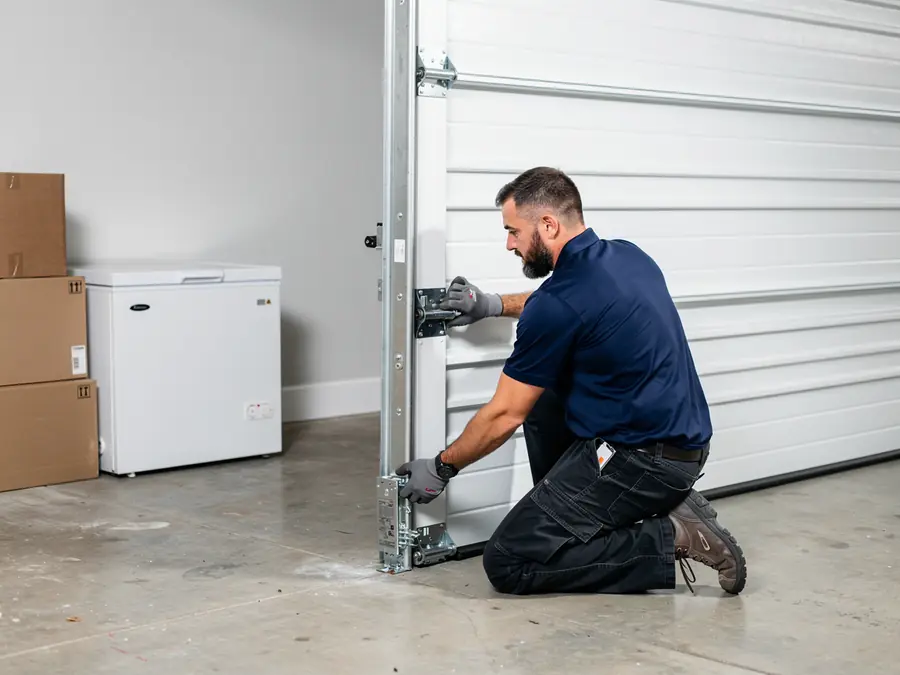
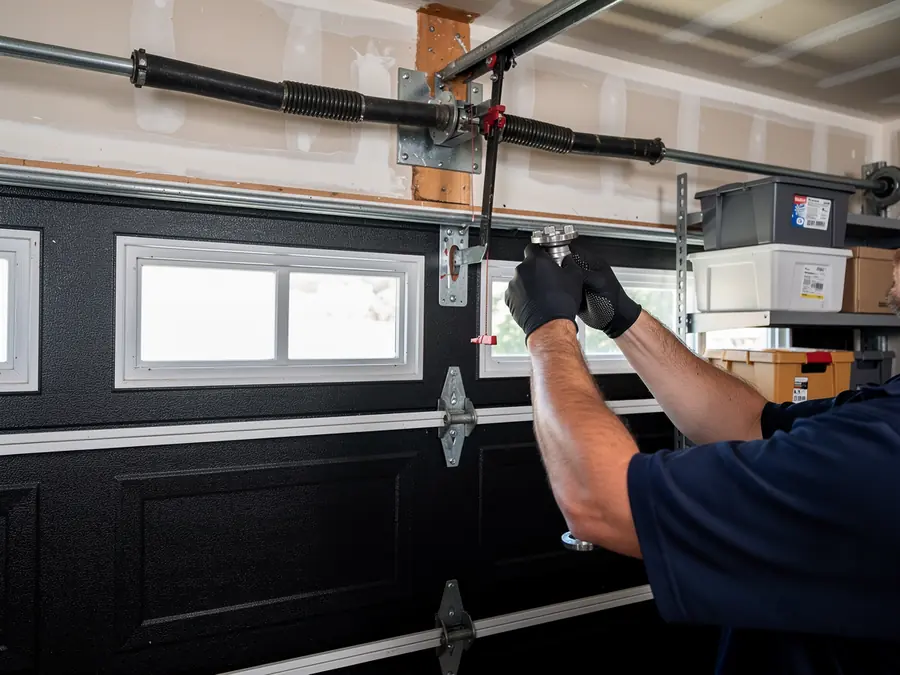
For extension-spring doors, the repair is usually a matched pair replacement - you don't do one side and leave the other to fail next, since mismatched springs put the door out of balance and strain the opener.
We also check for safety cables threaded through the springs; a lot of 1975-era installs never had them, and it's a cheap add that keeps a snapped spring from becoming a projectile.
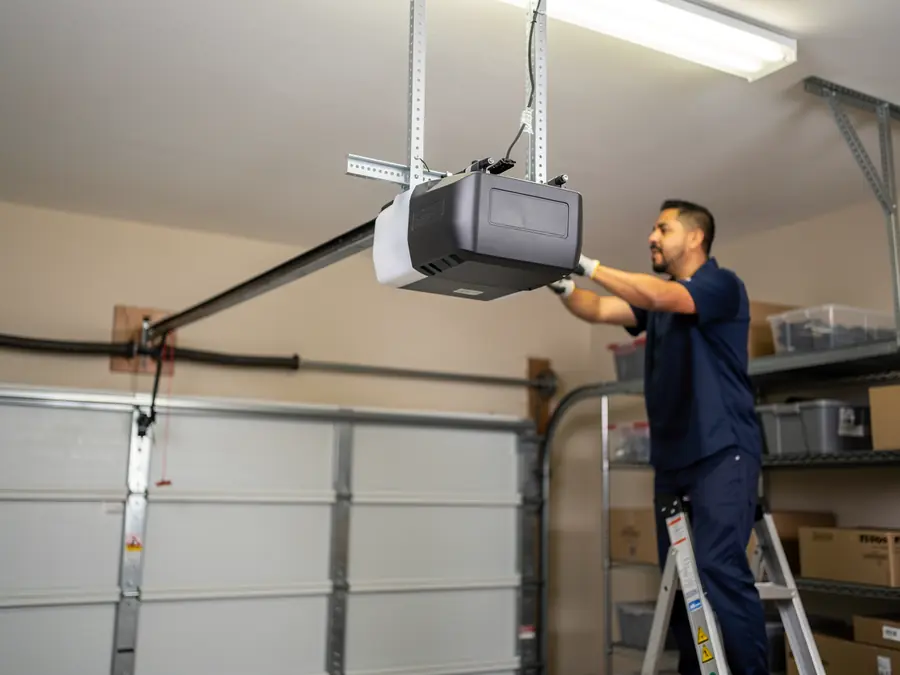
On the opener side, fixing a drifting limit switch is mostly careful adjustment and testing, not a parts swap - though if the gearset inside a decades-old chain drive is worn down to metal shavings, replacement makes more financial sense than repair, especially on a household budget. With median income here running under the wider service area average, we try to fix before we replace wherever the hardware allows it.
Watch-outs
The honest limitation: once an extension spring snaps under tension with no safety cable installed, it can whip hard enough to dent a car hood or a windshield, and we've seen the aftermath more than once on doors this age. If your door is original or near-original from 1975 and has never had cables added, that's worth fixing before the springs go, not after. We also won't force a 50-year-old track back into square if the wood behind it has rotted - patching the track and ignoring the jamb just means we're back out in a year. In that case the honest answer is a new section of jamb framing before any door hardware goes back on, and that's carpentry, not garage door work, so we'll tell you straight when it's past what we do.
Questions
Most homes here were built around 1975, which means original or first-replacement extension-spring systems rather than the torsion-bar setups common in houses built after the mid-1980s. Extension springs sag and fatigue differently, so the failures - slamming doors, uneven travel - show up sooner and look different from what you'd see on a newer torsion setup.
Depends on what's worn. A drifting limit switch is a cheap adjustment. A gearset ground down after decades of chain drive isn't worth patching - parts for openers that old are getting harder to source, and a new unit often costs less than chasing repeated failures on the original.
No. We're based in Lakeland and drive out to Crystal Lake, about four miles away, for every call. There's no local depot here, just a short trip from our Lakeland location.
Explore more
Ready when you are
Lakeland Garage Door Co repairs and installs garage doors, springs and openers in Lakeland, FL and the surrounding area.