Local detail
The Cost of This Job
The fault we see most in Lakeland Highlands isn't storm damage or a dented panel from a bad backup job. It's fatigue. A torsion spring rated for roughly 10,000 cycles doesn't care that the house sits in a higher-income pocket of the service area - it winds down the same whether the garage is worth $150,000 or $450,000. With median year built sitting at 1986 for this part of town, a lot of springs, cables, and the original chain-drive openers are well past their expected working life, and failure usually shows up as the door refusing to open rather than snapping outright.
What that means for cost: replacing a spring or opener on a house built in the mid-80s is usually a straightforward swap, because the hardware from that era is standard-sized and still stocked. What drives the bill up is when the original track or roller system has been bent or jammed for a while before anyone calls - that turns a spring job into a spring-plus-track job. We quote after we see the door, not before, because a 1986 build with an opener that's been replaced once already costs less to fix than one that's never been touched.
The area
Getting It Booked In
We run this call from Lakeland, about 7 miles from Lakeland Highlands, so there's no local branch here - just a truck that comes out on schedule. With roughly 4,429 households in this part of town, we're not trying to be the garage on every corner; we're trying to show up with the right spring size and opener parts already loaded, which only works if we know the door's age and symptom before we leave the shop.
Tell us the year the house was built, or close to it, when you call. For Lakeland Highlands that's almost always going to land near 1986, and that single number tells us more about what's likely wrong than a description of the noise does. It also tells us which opener model family to bring, since openers from that era use different mounting and wiring than anything made in the last ten years.
What we find
What the Fix Involves
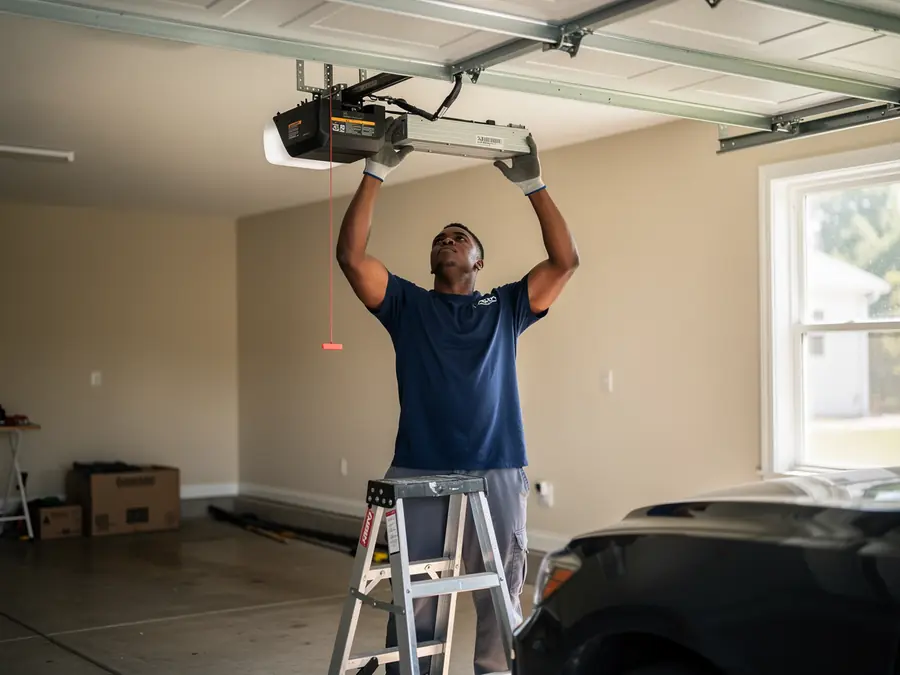
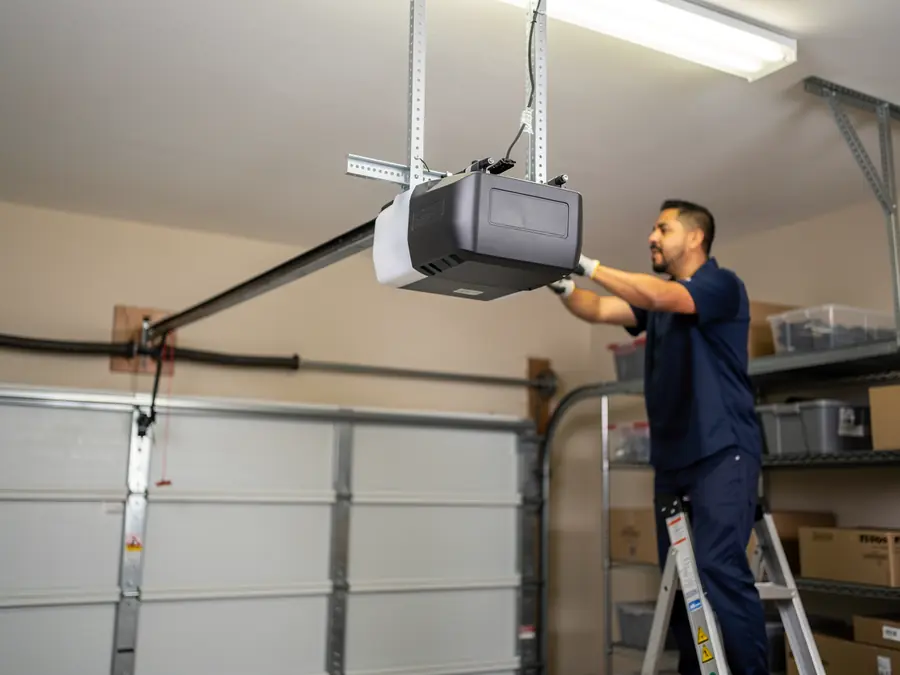
On a house from this era, the fix usually starts at the spring, not the opener, even when the opener is what quit working. A chain-drive unit from the 1980s or 90s will often keep straining against a dead spring until the gear inside strips - so what looks like "the opener broke" is frequently "the opener died trying to lift a door the spring stopped helping with." We check both every time, because fixing one and ignoring the other means a second call inside a year.
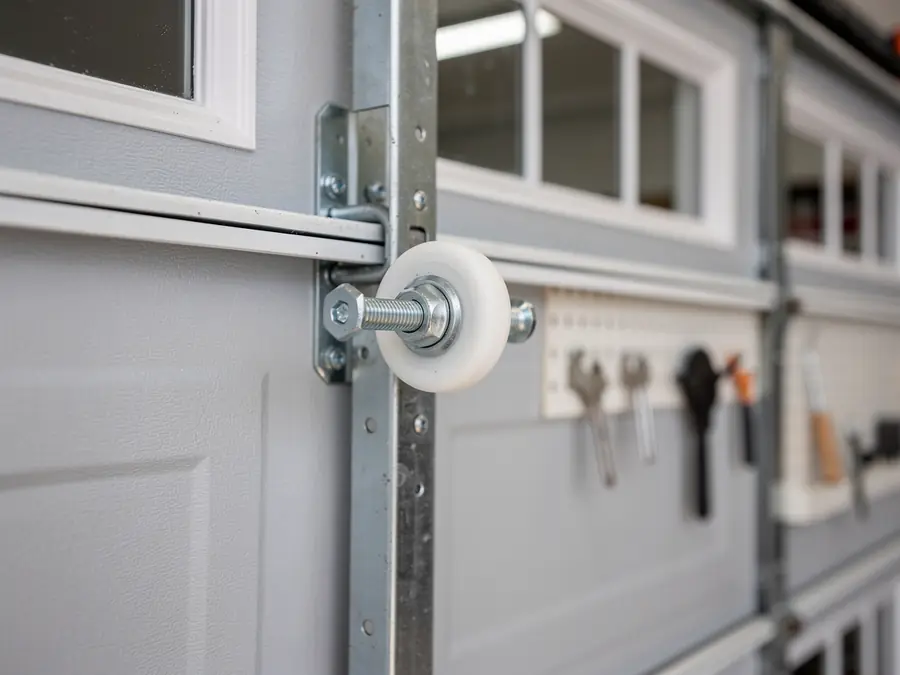
The climate here is mild rather than extreme, so we're not fighting the kind of temperature swings that crack panels or warp wood doors the way you'd see further north. What gets these doors instead is slow corrosion on springs and hinges from humidity, plus thirty-plus years of normal use. Rollers get replaced more often than people expect, especially the original steel ones, which were standard before nylon rollers became common.
How we work
The DIY Question
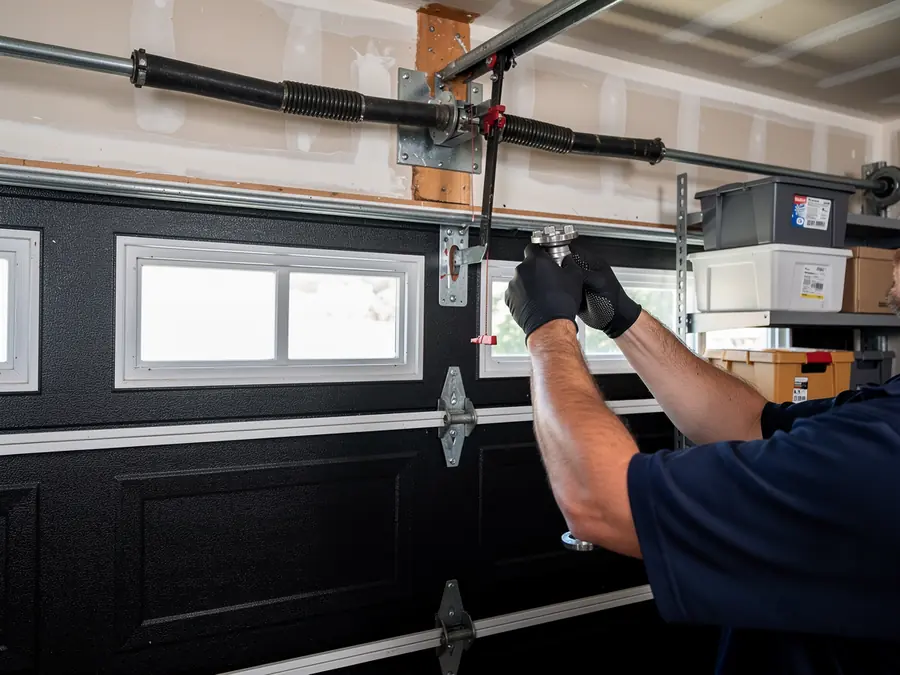
A torsion spring under tension can take a finger or worse if it lets go while you're working on it, and that's true no matter how handy you are - this isn't a job we'll walk you through over the phone. Where DIY makes sense is lighter maintenance: lubricating hinges and rollers, tightening loose bolts on the track brackets, checking that the sensors near the floor are aligned and not fogged over.
One honest limitation: if your opener is an original 1986-era chain-drive unit and the logic board has failed, we may not have that exact board on the truck. Boards for openers that old are sometimes special-order, and we'll tell you upfront if that's the case rather than quote a same-day fix we can't deliver. In that situation, replacing the opener outright is usually cheaper than waiting on a part for a unit that old anyway.