Local detail
The Cost of This Job
A lot of the houses out in Lakeland Highlands went up around 1986, and in our experience, the garage door hardware on those homes is still whatever the builder put in - original springs, original track brackets, sometimes the original door panel itself. That's close to 40 years on hinges and rollers that were only rated for maybe half that. When we price a new install here, the first question isn't the door style, it's whether the opening still matches a standard size or whether decades of settling have thrown the frame out of square, which adds labor.
We travel the 7 miles out from Lakeland for these jobs regularly, and the pricing conversation tends to go differently than it does on the older side of the city. Lakeland Highlands households report a median income around $106,012, well above the $59,346 median across the wider service area, and that shows up in what people choose - insulated steel doors, higher-end openers with battery backup, sometimes custom panel finishes instead of the builder-grade option. None of that is required; a plain steel door does the same job for less. But we quote both ends because both get asked for out here.
We don't give a number without seeing the opening - door width, header clearance, and what's behind the drywall all move the price.
The area
Getting It Booked In
Because Lakeland Highlands sits about 7 miles from our Lakeland base, we schedule installs here as a planned trip rather than a same-hour stop. That's not a knock on the area - it just means we bring the right door and hardware on the truck the first time instead of making two trips. If you're replacing a door that's original to a mid-80s build, we'll usually ask for the rough opening measurements and a photo of the current track and spring setup before we come out, so we show up with parts that actually fit a 1986-era frame instead of guessing.
Mild central Florida weather means we're not racing a freeze or working around snow load, which keeps scheduling simpler here than it would be somewhere with a real winter. Humidity and afternoon heat are the bigger factors - they affect how we time the foam seal and weatherstripping install, not the structural work. Booking is straightforward: tell us the door width and whether you want to keep your current opener, and we build the trip around that.
What we find
What the Fix Involves
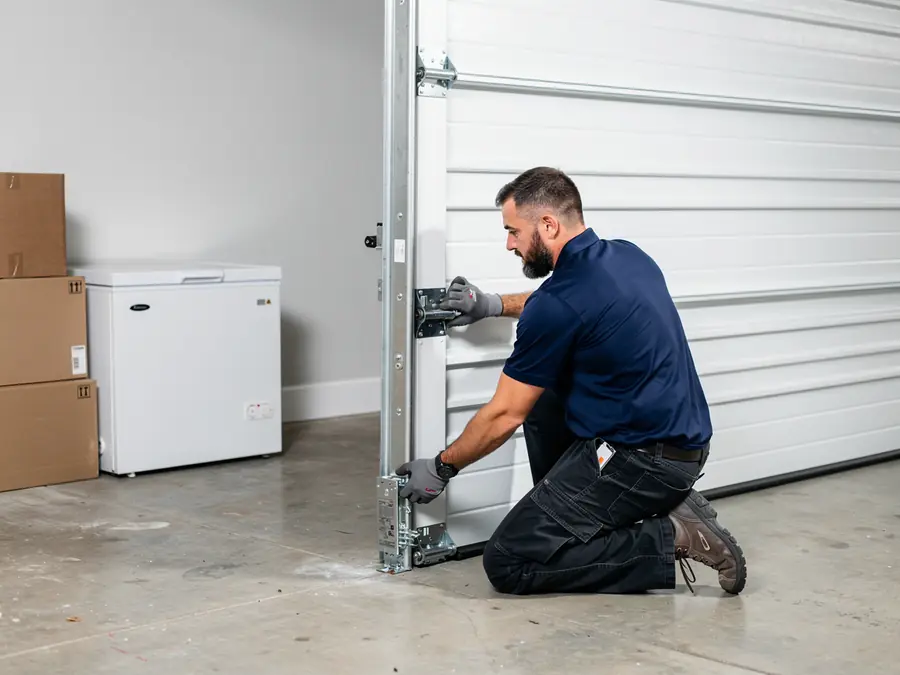
On a house from the 1986 build era, a new install is rarely just unbolting an old door and bolting on a new one. The track brackets are usually original, and on a lot of these homes they were lag-bolted into framing that's shifted slightly over four decades. We check plumb on both tracks before anything else goes up, because a new door hung on an out-of-square frame will bind within months regardless of how good the door itself is.
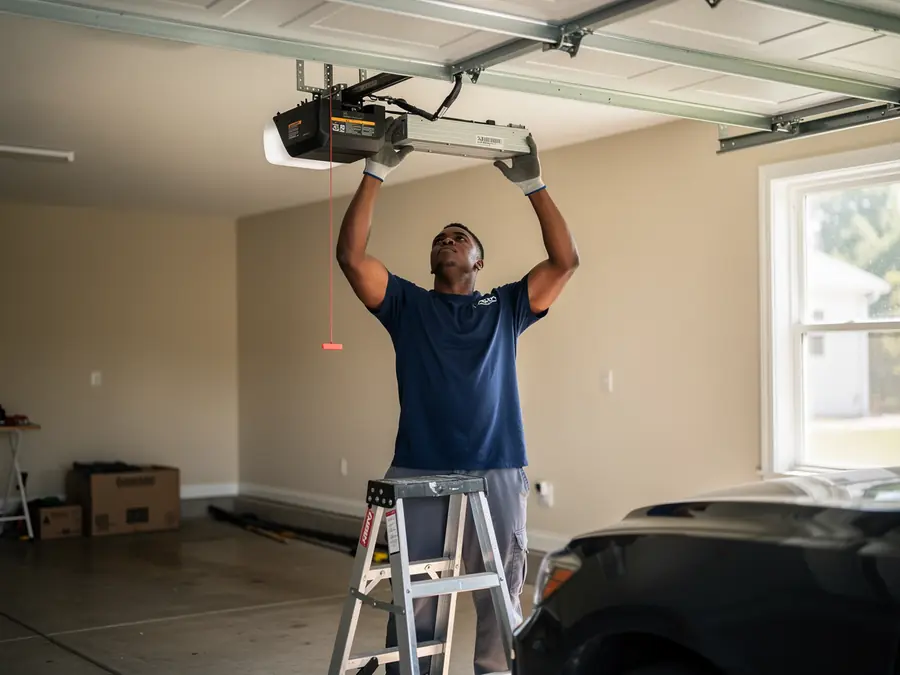
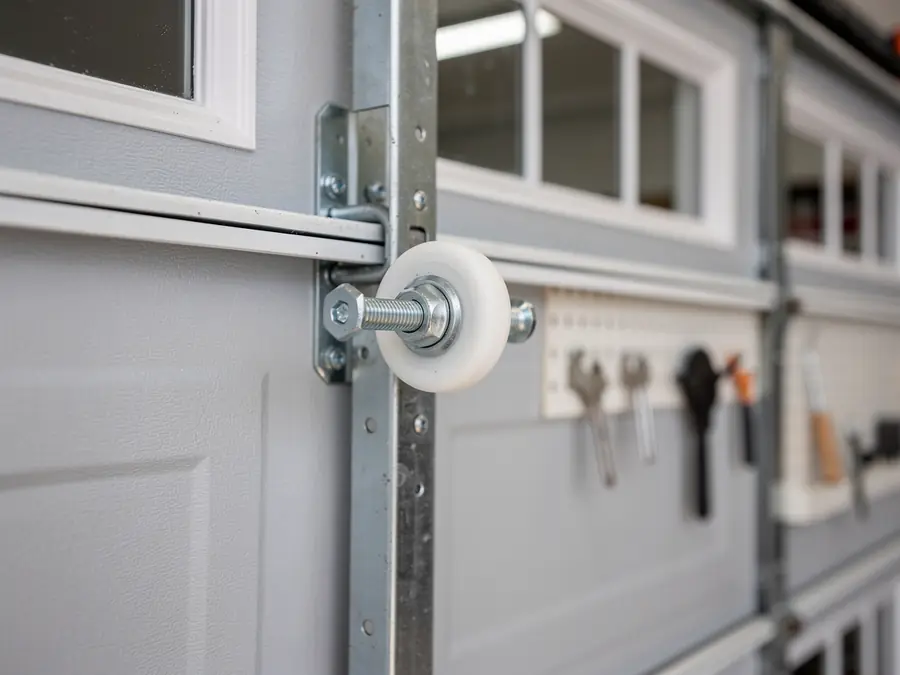
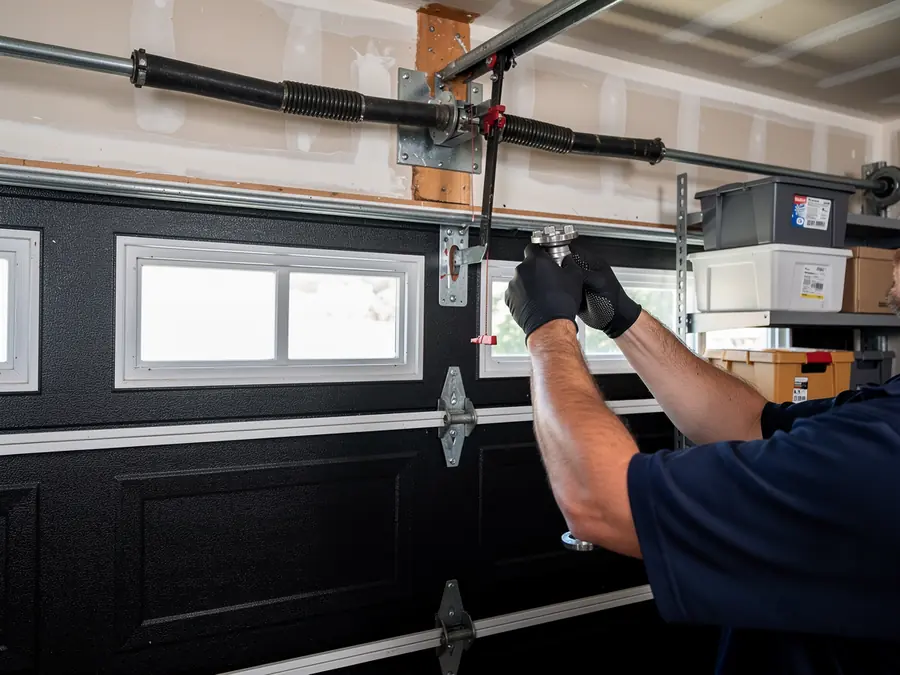
The springs get replaced as a matter of course - nobody should be running decades-old torsion springs under a new door's load numbers, and if the old setup used extension springs instead of torsion, that's often the single biggest upgrade in the job, both for safety and for how smooth the door feels day to day. We also swap worn rollers and cable drums while the door's off its tracks, since that hardware is cheap to replace now and expensive to call us back for later.
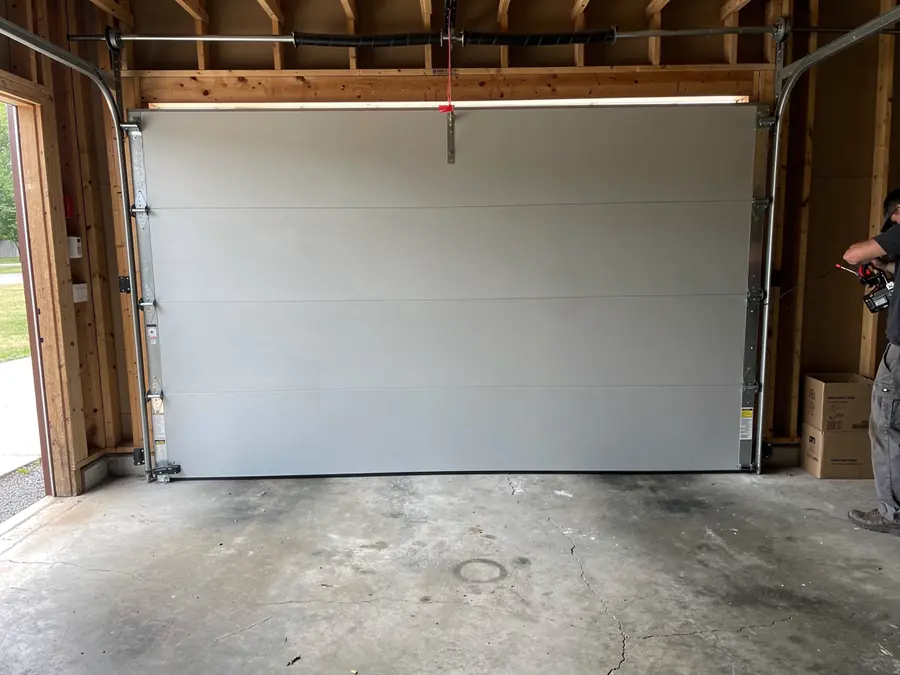
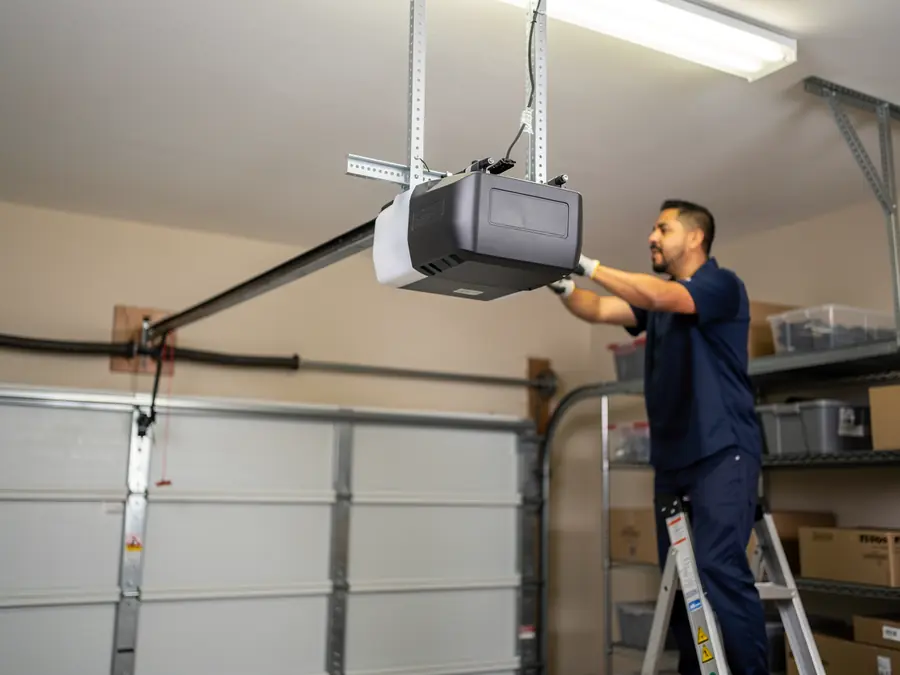
Once the new door's hung, we test balance, set opener force limits, and seal the bottom and sides. Mild local temperatures mean we're not fighting seal shrinkage from extreme heat or cold, so a properly installed weatherstrip here tends to hold its shape for years.
How we work
The DIY Question
We'll say this plainly: a garage door installed in 1986 that's never had its hardware touched is not a DIY swap. Torsion springs store enough force to break bones or worse when they're under tension, and on a door this old, you often can't tell from the outside whether the spring is original or a mismatched replacement from some point in the last few decades. That uncertainty is exactly where people get hurt.
Where DIY does make sense is cosmetic - repainting a door, replacing a keypad, swapping a remote. We're not going to tell you to call a pro for a job that's a ten-minute fix with a screwdriver. But the structural side of a new install - track alignment, spring sizing, opener mounting into a header that may or may not still be sound after 40 years - is where we draw the line and recommend you don't go it alone. If you're set on doing the demo yourself, at minimum have the springs professionally released first.