Local detail
The Cost of This Job
Lakeland Highlands runs a median household income around $106,012, well above the $59,346 median across the wider service area we cover from Lakeland. That gap matters for one reason: it changes where the repair-or-replace line sits. On a lower-income street, a borderline door with a cracked panel and a dying spring often gets patched because a new door isn't in the budget this year. Out here, homeowners are more likely to ask us to just replace the whole unit once a second component fails on the same visit, rather than pay for two separate trips. For a straight broken spring on an otherwise sound door, the math still favors repair almost every time - a new torsion spring costs a fraction of a replacement door, and the rest of the hardware on a house built in the 1986 range is usually fine once the spring is swapped. We'll tell you straight if your opener, track, or panel condition pushes the number the other way instead of just selling you a spring you don't need.
We quote the job on site, not over the phone, because spring size and cycle rating depend on door weight, which varies even among similar-looking houses on the same street.
The area
Getting It Booked In
We run this job out of Lakeland, about 7 miles from Lakeland Highlands, so there's no separate branch or crew stationed out here - just a truck making the drive with the right spring stock aboard. That distance is short enough that it doesn't change how we price the call, but it does mean we like to confirm the spring type (torsion vs. extension, single vs. double door) before we load the truck, since the roughly 4,429 households in this part of the service area span a narrower build window than some of the older sections closer to town.
Most of what we see here dates to the 1980s and 90s, which is a fairly consistent era for spring mounting and door weight. That consistency is actually the one thing that speeds up booking - we can usually tell you the likely spring size from the door's age and rough dimensions before we even pull up.
What we find
What the Fix Involves
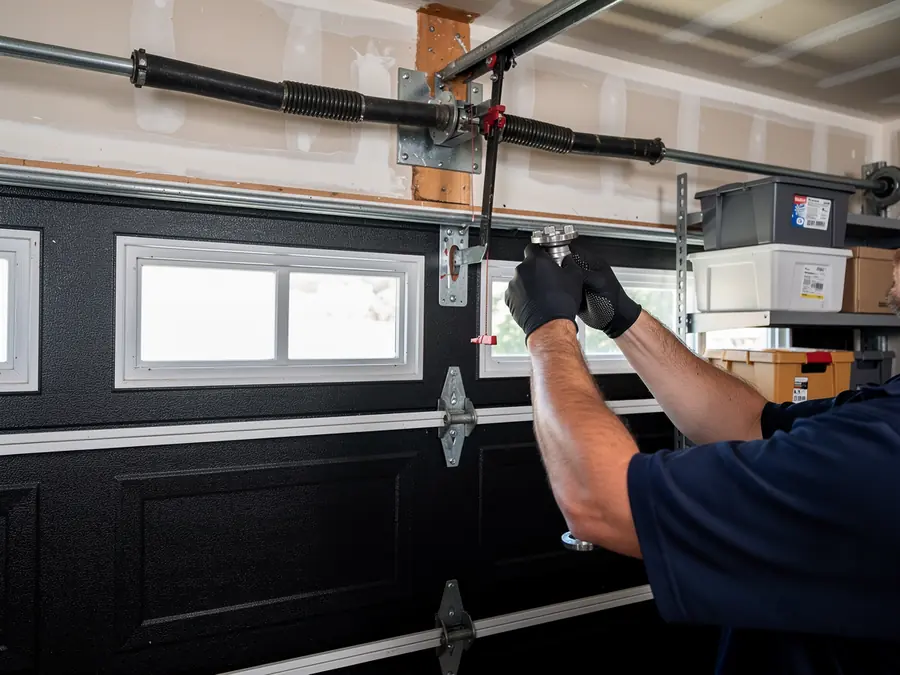
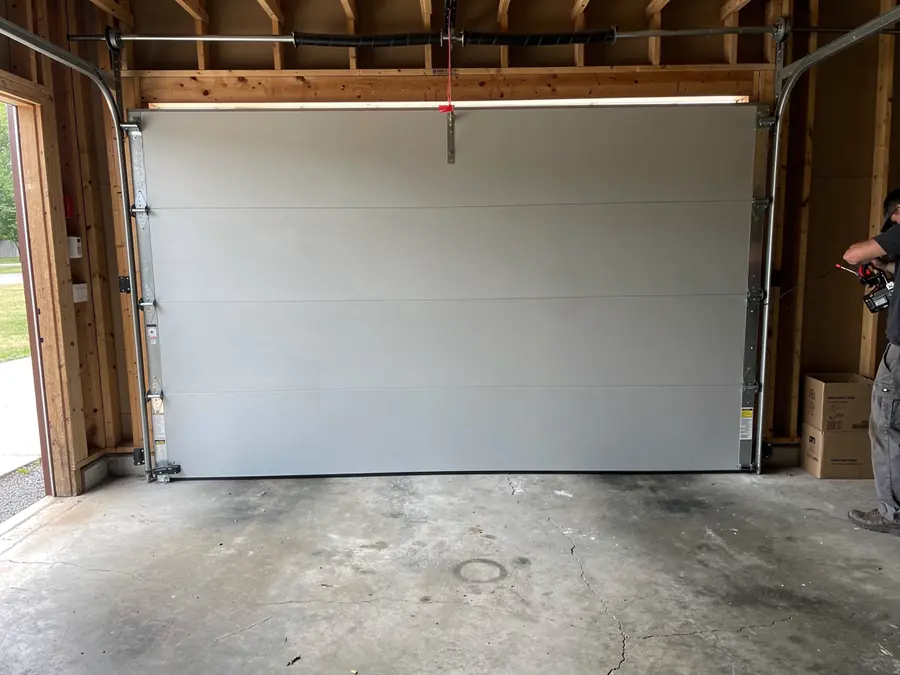
A broken torsion spring means the door won't lift, or an opener strains and stalls partway up - the opener isn't built to lift a door's full weight unassisted. We unwind what's left of the old spring under control, measure the wire gauge and wind length against the door's actual weight, and install a matched replacement rated for the cycle count a daily-use residential door needs. On houses from the 1986 construction era that are still on their original hardware, we'll also check the center bearing plate and cable drums while the spring is off, since those parts age on the same clock as the spring and fail soon after if left alone.
Mild central Florida winters mean we're not dealing with the spring fatigue that comes from hard freeze-thaw cycles - the kind that cracks springs in colder climates. Out here, springs more often reach end-of-life from plain cycle count: years of daily opens and closes wearing the coil down, not weather damage. That's a smaller, more predictable fix, and it's one reason we can usually complete it in a single visit without ordering parts.
How we work
The DIY Question
A garage door spring, torsion especially, is under enough stored tension to break a bone or worse if it lets go while you're working on it. That's the honest limit here: we don't recommend homeowners replace their own torsion springs, and we won't walk someone through it over the phone. Extension springs carry less risk but still require a safety cable run correctly, and most houses in this part of the service area from the 1986-era build-out have the torsion setup anyway, not extension.
What you can safely check yourself before calling: whether the door is binding on a track versus simply refusing to lift at all, and whether the opener is straining audibly. Both tell us something before we arrive. Beyond that, this is a job for someone with the winding bars and the experience to use them, not a weekend project.